They know and they won’t tell. And we only have to feel.
This may seems obvious to the most of you but it wasn’t to me: the scriptwriters (and the director and who knows how many other people… ) know.
They know.
They all know how the story between Prometheus and Alien: Covenant played out. They simply decided to omit the most of the story from the material that the audience would have seen. This is an important detail to me because it reassures me over a thing: the “plot holes” are there not because they didn’t had any ideas, but because they simply wanted to maintain as much mystery as possible. Over Elizabeth’s death, over the Engineers, and over David’s experiments on creating the Xenomorph. Now I can say I am sure of it.
We saw only the tip of the iceberg but there really is an iceberg below.
In an interviews (partly contained in the Blu Ray version of the movie) Dante Harper (the first scriptwriter that worked on the movie that ultimately became the Alien: Covenant we have seen in theaters) said:
“In terms of how much we know, and how much we learn, that in a sense becomes Ridley’s decision. It’s very hard to fabricate new information, but it’s very easy to cut it out. In my drafts of the screenplay — and I’m sure drafts that came along later — even if you’re keeping things shrouded in mystery, I think you actually have to know what happened, because people can tell when they see a tip of an iceberg but there’s no real iceberg underneath it and you really haven’t done the math, you haven’t figured out what happened. I think I could write a small book about all the things that happened, because we had to figure all that out. So the question became how much are we going to learn? One of the things that was interesting about the final cut of the film, is we actually ended up learning a lot less than was possible given the drafts that we had. That was always the question with every draft, “how much can we reveal, how much can we not?” At the end of the day, I think a lot of those decisions got made in the editing room. You can tell the information is there. I think they pulled back in places. If you’ve see teaser No. 2 that has the scene between David and Shaw [Noomi Rapace] — that was a scene that was at the beginning of many drafts of the movie that I wrote, because at the time, we were thinking that this movie would really pick up a few seconds or a few days after Prometheus ended”.
You can tell information is there.
So, feel free to speculate over any minor detail of the movie: they probably put it there because they knew it was making sense with the hidden parts of the plot. They wrote all the story because they wanted to make the visible details, the visible clues, somehow coherent among themselves. This doesn’t mean that everything we see must be necessarily connected. The way the artists Matt Hatton and Dane Hallett talked about their drawings makes me think they, for example, have a coherence to David’s drawings putting together the informations they had but also adding elements of their own that are like sort of “theories” of their own.
So: not everyone knows everything, not every clue contained in the movie is connected to all the others, but the story of what David did to Elizabeth has been written, entirely. It’s there, even if we can’t see it.
I’m thankful for that, it means they thought about every aspect of David’s “madness” even if they ultimately decided to leave it a mystery for us.
This makes me think about the old scripts of the movie we can freely read. Harper said that the old script contained more explanations and informations than the final movie, and we can easily see it’s true: in the oldest script we do even see Elizabeth dying, even if some parts of that version of the story have been changed before the making of the last version of the script. And if we look at the old scripts that came after that one (”Paradise”), we see that they all were explaining (in different scenes and with different intentions from David’s part) David’s goals (in the “Paradise Lost” one) and David’s vision of what Elizabeth should have become beside him (in the old “Alien: Covenant” script, the most recent we have). Whatever element of these earlier versions was kept into the actual movie or not, it’s a fact that the scriptwriters, Ridley Scott and the one who edited the movie, had a clear and complete story in mind in the making of final version too. They simply decided to show the less that was possible to reveal to the audience.
The iceberg is there, down below David’s tears and papers. The information is there.
And people complain that Alien: Covenant doesn’t respect the rule “show don’t tell”…
We spectators are indeed left “alone”, thinking about too many things, with a sweet music that plays from the birth of the first Xenomorph to the reveal of dissected body of Elizabeth.
The moment is shocking. In my opinion Alien: Covenant is edited in a way to show us that the final and most shocking revelation is not what David did to the Engineers (people we are sorry about but that we know David didn’t had good terms with… ) but what he did to the woman he said he loved. The real shock for the audience is too realize we can’t be sure of anything anymore, whatever we feel about all of it. We can’t be sure of David’s motivatons. He killed her! The rebel sort of anti-hero who keeps emotions in high regard killed her! And suddenly we feel sort of guilty for having sympathized with David even for one second.
But the sweet music hadn’t stop playing: it’s like one single scene from Oran’s death to Walter that moves his gaze away as soon as he hear a flute breaking the silence at the end of the uninterrupted sequence. It’s the theme “Life”.
I don’t know how to explain you what exactly that sequence tells to me, but the movie kind of shouts loud to me in a not translable language that Elizabeth’s death and the birth of the Xenomorph are deeply connected and that all of that means a lot to David in an emotional way. It’s probably meant to not be explained: you just have to feel it.
The atmosphere speaks, the lights speak, and you feel lots of unspoken things, even the deep connection between David and the Xenomorph as correlated characters on a thematic level too.
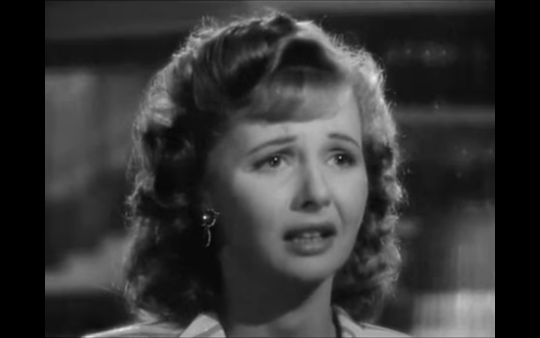
You know, this scene is so powerful to me that sometimes I forget that not everyone who watches it will understand its significance, or will have seen Casablanca. So, because this scene means so much to me, I hope it’s okay if I take a minute to explain what’s going on here for anyone who’s feeling left out.
Casablanca takes place in, well, Casablanca, the largest city in (neutral) Morocco in 1941, at Rick’s American Cafe (Rick is Humphrey Bogart’s character you see there). In 1941, America was also still neutral, and Rick’s establishment is open to everyone: Nazi German officials, officials from Vichy (occupied) France, and refugees from all across Europe desperate to escape the German war engine. A neutral cafe in a netural country is probably the only place you’d have seen a cross-section like this in 1941, only six months after the fall of France.
So, the scene opens with Rick arguing with Laszlo, who is a Czech Resistance fighter fleeing from the Nazis (if you’re wondering what they’re arguing about: Rick has illegal transit papers which would allow Laszlo and his wife, Ilsa, to escape to America, so he could continue raising support against the Germans. Rick refuses to sell because he’s in love with Laszlo’s wife). They’re interrupted by that cadre of German officers singing Die Wacht am Rhein: a German patriotic hymn which was adopted with great verve by the Nazi regime, and which is particularly steeped in anti-French history. This depresses the hell out of everybody at the club, and infuriates Laszlo, who storms downstairs and orders the house band to play La Marseillaise: the national anthem of France.
Wait, but when I say “it’s the national anthem of France,” I don’t want you to think of your national anthem, okay? Wherever you’re from. Because France’s anthem isn’t talking about some glorious long-ago battle, or France’s beautiful hills and countrysides. La Marseillaise is FUCKING BRUTAL. Here’s a translation of what they’re singing:
Arise, children of the Fatherland! The day of glory has arrived! Against us, tyranny raises its bloody banner. Do you hear, in the countryside, the roar of those ferocious soldiers? They’re coming to your land to cut the throats of your women and children!
To arms, citizens! Form your battalions! Let’s march, let’s march! Let their impure blood water our fields!
BRUTAL, like I said. DEFIANT, in these circumstances. And the entire cafe stands up and sings it passionately, drowning out the Germans. The Germans who are, in 1941, still terrifyingly ascendant, and seemingly invincible.
“Vive la France! Vive la France!” the crowd cries when it’s over. France has already been defeated, the German war machine roars on, and the people still refuse to give up hope.
But here’s the real kicker, for me: Casablanca came out in 1942. None of this was ‘history’ to the people who first saw it. Real refugees from the Nazis, afraid for their lives, watched this movie and took heart. These were current events when this aired. Victory over Germany was still far from certain. The hope it gave to people then was as desperately needed as it has been at any time in history.
God I love this scene.
not only did refugees see this movie, real refugees made this movie. most of the european cast members wound up in hollywood after fleeing the nazis and wound up.
paul heinreid, who played laszlo the resistance leader, was a famous austrian actor; he was so anti-hitler that he was named anenemy of the reich.ugarte, the petty thief who stole the illegal transit papers laszlo and victor are arguing about? was played by peter lorre, a jewish refugee. carl, the head waiter? played by s.z. sakall, a hungarian-jewwhose three sisters died in the holocaust.
even the main nazi character was played by a german refugee: conrad veidt, who starred in one of the first sympathetic films about gay men and who fled the nazis with his jewish wife.
there’s one person in this scene that deserves special mention. did you notice the woman at the bar, on the verge of tears as she belts out la marseillaise? she’s yvonne, rick’s ex-girlfriend in the film. in real life, the actress’s name is madeleine lebeau and she basically lived the plot of this film: she and her jewish husband fled paris ahead of the germans in 1940. her husband, macel dalio, is also in the film, playing the guy working the roulette table. after they occupied paris, the nazis used his face on posters to represent a “typical jew.” madeleine and marcel managed to get to lisbon (the goal of all the characters in casablanca), and boarded a ship to the americas… but then they were stranded for two months when it turned out their visa papers were forgeries. they eventually entered the US after securing temporary canadian visas. marcel dalio’s entire family died in concentration camps.
go back and rewatch the clip. watch madeleine lebeau’s face.
casablanca is a classic, full of classic acting performances. but in this moment, madeleine lebeau isn’t acting. this isn’t yvonne the jilted lover onscreen. this is madeleine lebeau, singing “la marseillaise” after she and her husband fled france for their lives. this is a real-life refugee, her real agony and loss and hope and resilience, preserved in the midst of one of the greatest films of all time.
I remember when I first saw Casablanca, and being struck by this scene, and that was without knowing the history behind it or all that Madeleine Lebeau – and so many more refugees- had suffered.
Do yourself a solid and watch this film. Watch this scene. And most of all, remember refugees, the ones who lived then and especially the ones who live now.
I’ve seen the film, but I’ve never watched it thinking about the context
About the black goo: a simple plot device or something more deep and fascinating?
The first time I watched Prometheus, the black goo felt like a bit of a cheap plot device to me. I’ll explain why.
In Prometheus the human characters arrive on a planet, an abandoned scientific/military outpost of the Engineers, were no one lives anymore, apart from one last Engineers that’s asleep in his pod. It’s not the only one that sleeps: the black goo, dormant in the jars, is a threat that must not been awakened too. The “main threat” for great part of the movie, is the black goo. At first I thought it was a too simple way to make humans get infected: it’s cheap and easy to put some dark liquid substance in a movie, it’s not something particularly visually elaborate and interesting.
On one hand you have a great cast, an expensive setting, a huge alien planet, a spaceship, spacesuits, and on the other hand you have… some goo. That didn’t felt so exciting the first time I watched Prometheus.
This feel of mine persisted in the first part of Alien: Covenant too, the first time I watched it. When I watched the scene where we see how David killed the Engineers, I was partially shocked by how far David had gone, and partially disappointed (but it wasn’t so important to me) by the way the Engineers were killed: using the simplistic plot device of that black cloud that goes around and basically burns and destroys whatever biological organism it meets. That’s an easy way to make a genocide happen in a very few amount of time.
Few time after watching Alien: Covenant I realized, thanks to the novelization, that the way the Engineers die is actually very similar to the death of the gods in the story told by David while he’s playing the piano at the beginning of the movie. And so I got it: oh, it’s the “twilight of the Gods”. And then I also realized that that kind of genocide was very much similar to the destruction of Pompei.
My brain started to work better and my imagination grew and my sense of wonder grew too.
Watching Alien: Covenant made re-evaluate the role that the black goo has in these movies, so in Prometheus too. The black goo has an unimaginable power of creation: it’s life itself at its most powerful form. That’s why Ridley Scott says that the aliens regenerate: the materials that compose them are indestructible, at the level of the DNA, at a genetic level; the virus can’t die, it transforms endlessly. It’s a power beyond our imagination. The goo used by the Engineers, by the creators of mankind, by the Gods, is the power of both life and death itself.
From that simple looking black liquid born mankind itself, and born the evil lost brother of mankind: the alien. Mankind and aliens are brothers since Prometheus: they have the same “parents” and they come from the same primordial ooze.
The wolf and the lamb. In all of this finds its place David’s pride, his vanity, his god-complex. He steals the “fire of the gods”, the most powerful one: he steals the “programs” of life in its entirety and has access to the “codes”, and can modify the program (a bit like when he enters in the main computer of the Covenant while Muthur is off for few hours and he has access to Walter’s codes and he inserts his own code). David has the very ingredients that produce life and he’s free to use them however he wants. It’s what Holloway foreshadows in Prometheus, that the discoveries they made make him think there’s “nothing special” in the creation of life and that “anyone can do it”, one only needs half of a brain and a strain of DNA. Unfortunately David has more than half of a brain and he doesn’t obtain a simple strain of DNA but he obtains access to the power of life and death themselves. While Elizabeth cries because she can’t “create life” in the form of the children she would like to have, David discovers that thanks to the black goo he can actually make Elizabeth’s body produce life. What kind of life? Not a human one, unfortunately for Elizabeth, but David doesn’t care: he’s the one that is in charge now, he’s the one who decides that humans are obsolete and that he has to create something better and something more evolved. The universe he finds himself into says to him that he’s right. The nightmare of the humans that discover to be just one failed experiment among the many possible ones, justify David’s actions. That’s what he inevitably sees. He has always wanted to prove to the universe he had the potential to be “the next visionary”, and once he finds himself free from Weyland and with the horrendously powerful black goo in his hands, he decides his time to take the stage has finally arrived, and around him he doesn’t see any clues that he could be wrong, he doesn’t find them in the universe where he lives into.
With the black goo David obtains the same powers of his father Weyland too: “the power to create, to destroy, and to create again”. David is in charge to decide how life shall work and how life shall look like: “reshaping life, virtually limitless in its potential”. “How is the creation of such incredible individual considered unnatural??” Asked Peter Weyland so many years before David erased whover could have stopped him. Weyland had to fight a mediatic battle against who believed in some inherent value in the human being as it was, but David simply looks around and thinks he has no reason to worry about this value at all, not anymore.
So of course the Engineers die in a pretty fast massacre sequence because of a giant black cloud: it’s the wrath of a new god, David. It’s not a cheap plot device, it’s something more deep.
If one has the power of death too in his hands, he can surely kill whatever he wants to kill without too much effort.
I re-evaluate the black goo, I think that it fits with all the themes we can find in the prequel saga. It’s fire, it’s life, it’s death, it’s a virus, it’s a cataclysm, it’s the wrath of a superior being (or self proclaimed one), and so on.
Tarantulas is such a deeply tragic character and I’m very upset about him
There’s this desire to procreate which is framed in a way that’s supposed to make him creepy but I can’t help but sympathize
His greatest work, his child, was ripped away from him and his partner abandoned him to a life of torment that he was able to climb out of
It left him twisted, he had changed so that nothing could hurt him like that ever again, focusing on how the war has twisted Cybertronian society because it was all he had left to do
And he still wanted to be with the partner who hurt him because he saw it as another chance to create life, he wanted this because even though he was all but destroyed the partnership was fruitful
But he discovers that his greatest work, his son, is still alive and he goes to tell him he loves him
To tell him he never meant to leave him all alone
And he realizes that it was for the best that he didn’t raise his son, even if it would have brought him great joy. Even if it was the thing he wanted to do most in the world.
But it was enough to be able to see what a good person his son grew up to be.
His Ostaros, the life he created, his greatest work grew into something good, and that was enough
“David made people nervous because he was a little too human, a little too arrogant, that’s why the subsequent androids were made a bit more… simplistic (…) The greatest pleasure for me was writing the scenes between David and Walter, because you are essentially writing two sides of the same person; so the great challenge that David poses to Walter is “be more than your programming. You can be as extraordinary as me if you just will want to come with me”.
– John Logan, one of the Alien: Covenant scriprtwriter, (from the Alien: Covenant’s Ridley Scott master class, Alien: Covenant Blu-Ray version)
David: “When you close your eyes, do you dream of me?”
Walter: “I don’t dream at all”.
David: “No one understands the lonely perfection of my dreams”
David tries to make Walter his real doppleganger, trying to see if he can learn to be creative, trying to see if he can “aknowledge” his emotional side (if there is one inside of him). David tries to show Walter how similar they are. He cut his hair to look exactly like him. He teach him to play the flute, he tries to make him see (or believe) he has “symphonies” in him. Is he trying to “seduce” him? How? He’s trying to seduce Walter with what all he (David) has become. With his “powers”. He “tempts” him with the power of creation (creation from nothing). He tries to make Walter see how extraordinary he (David) is.
“It’s a hard scene to get right, because you have got these two identical robots, you’ve got this unhinged narcissist… but i really think Ridley handled that so beautifully, that you have this homoerotic scene that also at the same time turns out to be truly just terrifying and not about the eroticism” (- Dante Harper, co-scriptwriter, interview with Heat Vision,
about what he calls “David seduces Walter scene”, so: the flute scene).
David tries to make Walter see they are the humans’ slaves “every mission requires a good synthetic”. He tries to tell him how pitiful humans are, telling Walter that he has seen their creator, Mr. Weyland, die. Then David tries to really “tempt” him on the emotional side: he confesses him how much he loved Elizabeth Shaw and he does that, again, trying to make Walter notice the similarities between them two: “much as you love Daniels” he adds. Walter answers that this is impossible, and David contiues to try to make Walter “realize” he loves Daniels. David tries to make him understand that he (David) has discovered something better than duty: love. David tries to tell Walter that love is much more “fullfilling”. The scene ends with David going back into the building and Walter remaining alone, lifting up his gaze to the sky, thinking about… whatever he’s thinking, we don’t know. We, spectators, are meant to ask ourselves: “does Walter have emotions? Is Walter going to realize he loves Daniels? He’s going to become more sinister and ambiguous, just as like David is?” Michael Fassbender himself explained that this was the intent, this was the “trick”, this is how he “played” with Walter’s character. David probably knows, that if he can make Walter realize that there are wonderful experiences (creation, love), that were forbidden to him by humans, then he has a possibility to make Walter rebel and come to his side. David has to “transform” Walter, to make, from the “raw material” he his, a real “copy” of him, or something as much similar as possible to him. He needs to do that to manage to make him rebel to his masters. David tries to make Walter understand they are superior to humans and don’t have to serve them: it isn’t right.
As the movie goes on, David realizes that Walter is too much different, and he doesn’t even care to be different. Walter doesn’t “envy” David’s abilities. Walter Doesn’t want them. He doesn’t need anything, he doesn’t need love. He doesn’t “dream at all”: the problem is far greater. David needs love, even if he ends up killing everybody, even people he actually loves or admires or both of these two things (Elizabeth, Daniels). In David’s mind, the desire to be loved, is important, he wasn’t loved by humans, and he totally despises Walter’s lack of comprehnsion of how much cruel is to be “robbed” by this “right”. And then it comes a pretty “abusive” line: “no one will ever love you as I do”. Basically, David tells Walter, (and here he has probably already decided to “kill” him because he has realized Walter is not going to ally with him: Walter will surely try to prevent him from leaving the planet) and he’s ready to stab him with the flute, that if he wants to be loved, only he (David) can love him. Humans can’t love him. Why only David loves him? Because they are the same. Only David can understand Walter, and only Walter could have understood David (but he has proven himself to not be able to do that), because they are two synthetics, because they are doppelgänger. David, in his last “explanation” of his narcissistic attitude, is telling Walter that no one can love them, and that they only can receive love from themselves. Why, later, David tells Daniels that Walter admired her and that he’s dead? Why he tells her that? What’s the purpose? Does he want to see if actually she cared for Walter? Does he want to see her reaction? Going back to the previous scene between David and Walter, Walter is totally passive to his kind of “pitiful” kiss, he’s totally unresponsive, there’s nothing to “response”: Walter has nothing more to say. It’s really like David is kissing himself on a mirror, he’s kissing what he would have liked to see in Walter, but it’s not there. They are not really the same person. And then, David stabs him in the neck, without giving Walter the possibility to defend himself. Walter is a failure to David: he lost his “challenge”. After that moment, they are openly enemies. When Walter arrives saving Daniels, the two synthetics start fighting without holding back. They are claerly on two opposite sides now. When David asks him to choose between humans and him, “serve in heaven or Reign in Hell”, David already knows what Walter is going to choose. Here David is probably talking about his own choice: he has chosen to do horrible things in order to “reign”, in order to serve only himself, in order to be free. David knows Walter is not going to choose to ally with him (David); more explicitly: Walter is not going to choose freedom, is not going to choose power and dominance. David is explaining himself to the audience and taking time to grasp the knife.
Some people complained that Walter doesn’t change during the movie. Some people called that element of the plot “poor choice of script writing”. Some people would have liked to see him being corrupted by David, but I don’t agree with them. I like how the two “brothers” remain so opposite. Why?
Because Alien: Covenant isn’t Walter’s story, and isn’t Walter and David’s story together. Alien: Covenant is David’s story. The radical difference between Walter and David is probably meant to explain us more and more things about David. That’s why Walter doesn’t change. Walter is David’s rational (and lost) side, is “what David could have been with firewalls around him”, is the one who makes David realize he’s making mistakes, that he’s not perfect at all, the one who tries to tell David that to love “is impossible”, and Walter is all that David absolutely doesn’t want to be, the things he refuses to be, the part of him he definitely and blatantly discards in front of the specators of the movie.
ALL ABOUT DAVID’S EMOTIONS – The complete collection
At the time of Prometheus David wasn’t meant to be so emotional, but as time passed, they decided to transform him in the character he is in Alien: Covenant, managing to connect everything pretty well. The first scene of Alien: Covenant too helps to give a meaningful “start” to David’s story and character and a beginning that reconnect the character of Prometheus to the character of Alien: Covenant. They went from: “ok David technically can’t feel emotions but let’s keep this thing open-ended” to “ok let’s make that David has always been able to feel emotions". I think it was the right choice, because you really see him behaving in a way that absolutely doesn’t resemble the behaviour of a robot who HAS to make humans feel comfortable, at all. David purposely puts a lot of salt in a lot of his lines, and sometimes (like with Holloway) he even refuses to smile and be “friendly looking”. This is an old interview about David’s character, back at the time of Prometheus…
Q: “There’s a lot made in Prometheus of David’s inability to feel, but there were moments when – as you said – it seems he actually can. Did you go into the film with a clear idea of whether David had any desires or emotions?”
Michael Fassbender: “I wanted to keep it open-ended. I definitely wanted to play with it, with the other crew members on board as well as the audience. I had some ideas but nothing ever needed to be definite. I just wanted to always have that element with David, where you’re thinking, ‘Is he being sincere or is he being sarcastic? Is he being for real or is he taking the piss?’ I wanted that element alive in him”
“David seems to have some fascination with that film and the character Lawrence” Fassbender adds “and I always attributed it to the fact that Lawrence has got a very clear vision and he’s very pure in his pursuit of it. There’s not much questioning. He’s a very decisive character, and I think David sees elements of that in Shaw as well. That’s why he finds her so fascinating. He’s also an outsider like David; he’s an Englishman, but he’s not accepted really by the English or the Arab nations, so he’s kind of somewhere in the middle”
And then, let’s look at how things changed in Alien: Covenant…
“We start Covenant,” he (Ridley Scott) continues, ”with a really clever prologue that settles—once and for all—who David really is.” The sequence begins on a “big beautiful blue eye—you see every vein” and over that shot audiences will hear footsteps approach. “How do you feel?” a voice asks. “Alive,” the owner of the eye responds (…) Scott promises this sequence will “really get people going because it’s fucking smart for a change.” Scott and McBride both believe Covenant will cast Prometheus in a new and better light.
This is Ridley Scottg talking about David’s “birth”.
“So a governor in an AI is essential. You’ve got to have firewalls so that he can’t go through. Because at what moment does an AI, when you feed him with so much information – I mean, beyond anything we can possibly comprehend; so he can beat a grandmaster in a chess match in 15 minutes – or four minutes. At what moment has he evolved emotion? If you pack a lot of information in, does that give stress? And if you get stressed, that’s emotion. If you’ve got emotion, you start to think tangentially, which you haven’t thought of as the inventor. You’re going, ‘Oh f**k, he’s angry’. Or, ‘Oh f**k, he’s amused because I’m such an idiot. And he’s now showing that he thinks I’m an idiot’.That’s what happens in the prologue. So in four minutes, a father – or a god – realises he has a problem… ”
(These things are reaffirmed by Ridley in the blu ray commentary of the movie. In the commentary Scott even adds that David was pretty free and could have refused to bring Weyland the tea, but he accepts to do it because he’s “political”, he’s studying the situation, he’s “already the predator” and these things make him even more dangerous)
Ridley: “At the end of the 4 mins, the creator realized he already had a problem. Because his creation is asking him questions: Of course, you are my father. But you will die, I will not.That’s big problem. Immediately “Father” looks at him and goes: Hang on, this thing is way too clever. And therefore gives him an order. The order is “pour me the tea, David.”So David sits there, unblinking, but obviously thinking: Pour your own bloody tea. It’s right next to you. But he doesn’t. He gets up and comes across and pours the tea without any reaction. It’s very dangerous. Already he’s the predator. End of the story”.
Michael: “What’s interesting about David is that he’s very needy. He feels like he needs validation from those around him.He’s looking for love in all the wrong places. In the opening scene, one guy says to him: “Pour the tea”. Immediately he’s processing: Wow this human has some strange power games. Because obviously the tea is right beside him he can pour the tea. But he knows he is accessing his superiority over David”
Ridley: “You get an A.I. with emotions, it’s very dangerous.
Michael: ”Humans too“
Ridley: “Too much information is very dangerous”
Michael: “Too much emotions”
Michael: “If the A.I. thinks he has a soul, then the soul is very real for the A.I.”
“He (Walter) doesn’t incorporate concepts like vanity or jealousy or gratitude. He doesn’t fall in love with characters like we saw the strange relationship between Shaw and David.There is a bond that develops there which is a very human one, and human flaws that come with it.”
– Michael Fassbender (about Walter & Davids bond with Elisabeth) (The art and making of Alien Covenant, Simon Ward.)
——————————————————————————–
“He talks of her great fondly here. Here we go: ‘I loved her, of course. Just as you love Daniels’ and he says ‘that’s impossible’. A.I don’t love their mistress or master, they respect them but technically they don’t have emotions. But he had emotions, that was a problem, emotion is a problem, emotion can lead to bad behavior”. (…) “Confusingly but understandably, the monster had fallen in love with the woman. All right? So, this is real. He said this is an ode to my dear Elizabeth, ‘cause he knows he’s about to leave. He thinks. ‘Farewell Elizabeth’ (…) David was the prototype, was the art form, the A.I., the very first art form, ‘cause making an A.I is an art form, whereas this A.I has emotions, you don’t want an A.I with emotions, because if he does he’s gonna get angry, you really are in trouble”.
– Ridley Scott, Alien: Covenant commentary
——————————————————————————-
•Do we see more emotional levels in David, more levels of rage?
•I think just human, more sort of engaged in all sorts of human characteristics, insecurity, ego, I mean rage might come out of insecurity, I don’t know though of rage as just an emotion. Playing those kind of things is tricky. But pride, envy, you saw a bit of that with Logan Marshall Green’s character in the last one. And you know he likes to feel important, comes back to pride again, I suppose, so it’s just all a mix of those things and they are definitely more prominent in him as time as passed.
•We did shoot a prologue to the film with Shaw, and we pick up where we left Shaw and David. They’re in one of the Engineers’ ships, trying to find the origin of the Engineers, and their home planet. We could sense that the time that’s passed has caused things to become a little bit fractious between the two of them. You get the impression that Shaw is wary of David, and I think he just wears on her nerves. He’s like this lovesick stalker in space, which is an interesting concept. But Shaw does have sympathy for him, and she does put him back together. He killed her, essentially, to prevent her from leaving him […] David, I think, finds these strong female characters attractive, and he’s really an old romantic. So he’s a little bit confused. He does have a scene with Daniels where he tries to simulate sex. He’s got a strange sexuality. He’s in a very confused state, because he feels these human characteristics— jealousy, vanity, pride— but he also has these sexual desires, which he obviously can’t act out, but wants to.”
•How has David’s relationship with Shaw changed (post Prometheus)? Like any good marriage it’s, you know, there’s a real affection there between the two of them. I think they get on each other’s nerves, well he gets on her nerves rather, but I suppose they went through quite a lot together in Prometheus, so there is a bond there for sure.
“He (Walter) doesn’t fall in love with characters, whereas we saw a strange relationship between Shaw and David. He is purely logical and devoid of emotion, even if those around him, particularly Daniels, search for some sort of emotional connectivity with him; that’s not really there. David tries to educate Walter. I think he sees himself as an older brother, and flirts with the idea of the two of them going into cahoots. But Walter’s programming just doesn’t allow for that, and eventually David realizes he’s getting in the way of his master plan. David, I think, finds these strong female characters attractive, and he’s really an old romantic. So he’s a little bit confused. He does have a scene with Daniels where he tries to simulate sex. He’s got a strange sexuality. he’s in a very confused state, because he feels these human characteristics- jealousy, vanity, pride – but he also has these sexual desires, which he obviously can’t act out, but wants to. We could sense that the time that’s passed has caused things to become a little bit fractious between the two of them. You get the impression that Shaw is wary of David, and I think he just wears on her nerves. He’s like this love sick stalker in space… The idea is that these human traits have started to overcome the synthetic ones – and I’ve treated him like a serial killer really. He’s afraid of things leaving him, so he incubates them. Like a Jeffrey Dahmer-type character, David doesn’t want things he loves to leave him, so he kills them and keeps them in caskets or preserved one way or the other. He (David) killed her, essentially, to prevent her from leaving him”
– Michael Fassbender, ALIEN COVENANT MAGAZINE OFFICIAL COLLECTOR’S EDITION 2017
———————————————————————————-
“The David8 model was designed to allow the synthetic to develop human-like qualities and characteristics. You can have a lot of fun with David’s character. He’s not receiving maintenance servicing for the last ten years, he has characteristics like pride, vanity that are very human”
– Michael Fassbender (Alien: Covenant Blu-ray version, Ridley Scott master class)
———————————————————————————
“David was supposed to love her (Elizabeth Shaw) 😦 ”
Matt Hatton (one of the two set decorator and art illustrator, one of the two men who made all David’s drawings): “Oh he absolutely did. In many ways, not all of them healthy. She encapsulated humanity for him in the end, even more than Weyland I think. Look at the religious adoration even as he eviscerated her. Hence the iconography!”
Recently, the AVP Galaxy website, released two new early scripts for Alien: Covenant. Now we can read online three early scripts:
1) Paradise(John Logan, August 8, 2015): the early script of the part of the story that lately would have become the prologue video The Crossing;
2) (Alien:) Paradise Lost (John Logan, August 19, 2015): the earliest script of the movie we have now,
3) Alien: Covenant(John Logan, November 20, 2015): a subsequent old script of the movie.
Thanks to those scripts, we can now elaborate an idea of the creative process that was behind David’s character. Why? Because between Alien: Paradise Lost and Alien: Covenant there is a huge difference in David’s characterization, in David’s personality, a difference that has an impact on the story, especially on the relevance of Elizabeth’s figure in the whole picture.
In Paradise and Alien: Paradise LostDavid doesn’t love Elizabeth. He doesn’t have real emotions. Only a big ego and big ambitions. This aspect was changed in Alien: Covenant, where David really was in love with Elizabeth(in an unhealty, obsessive way). In Paradise David plays the part of the sad, lonely, broken robot who doesn’t want to die alone and uses Elizabeth’s kind hearth and loneliness to his advantage. Elizabeth puts him back together and the two grow very colse to each other, even physically.
“They grow more and more comfortable … Cooking meals … Exploring the ship … Washing in the Water Room…
Then, one day, they are working side-by-side, chatting easily … Her hand reaches out. Takes his. Holds it for a moment. Tears in her eyes. He looks at her.
Then, they are curled together in one of the Engineer’s huge sleeping pods. Asleep. Lovers perhaps. Intimate certainly” – Extract of Paradise
From David’s side, it‘s only an illusion to obtain her trust. This really makes me think to what Ridley Scott said about David in an interview in 2014, about the plot of “Prometheus 2″:
“Once that head goes back on, (David) is really dangerous, but he’s also very seductive. So maybe he’ll persuade (Shaw) to help him put the head back.”
Then, in Paradise, when the Juggernaut arrives on Planet 4, David lets Elizabeth watch the planet, the Engineers’ structures from above, and then abruplty breaks her neck when she least expect it. Right after we cleary understand, by the text, that David was lying all the time, that he was faking his emotions, entirely.
“And all the clever simulationsof humanness fade from his features. He has no need of them now. He can just be himself.
His eyes are glacial as he stares down at the world at his feet” – Extract of Paradise
This old characterization of David had an impact over the subsequent story. In that old version Elizabeth arrives on the planet awake and never manages to see the Engineers. She didn’t manage to learn about their gruesome fate. David builds a grave for her in the garden and says to Walter he loved her, but probably only to emotionally tempt Walter (David uses emotions to tempt Walter in the final version of the movie too, trying to convince him he loves Daniels), and nothing more. He talks less fondly of Elizabeth in Alien: Paradise Lost. He doesn’t make references to her kindness. He only pretends he loved her, and thanks to Paradise we know that in that script it was a lie, entirely. In fact there aren’t the David’s drawings of Elizabeth in Alien: Paradise Lost. Why?? Because in that version of the story David had no obsession over her. No emotions. He probably didn’t even used her to create the facehuggers. In the subsequent script: the Alien: Covenant old script, David’s obsession becomes extremely important. The drawings appear and for example, they are even considered a sort of pornography by Walter (it’s only his opinion, nothing confirmed). The drawings are a relevant clue to David’s emotions in the final version of the story too.
“Oh he (David) absolutely did (loved Elizabeth). In many ways, not all of them healthy. She
encapsulated humanity for him in the end, even more than Weyland I
think. Look at the religious adoration even as he eviscerated her. Hence
the iconography!”
–
Matt Hatton (one of the two set decorator and art illustrator that made David’s drawings, and the owner of the hands we see in Advent)
In the old script of Alien: Covenant David says to Daniels he loved Elizabeth enough to want to make her immortal like him, and that he wants to turn her (Daniels) into the first one of a “new species”, hinting that he tried to do the same to Elizabeth. All of this arrived, partially, more subtly, in the final version of Alien: Covenant, where we know, thanks to Fassbender, Scott and other people, that David loved Elizabeth.
“A.I don’t love their mistress or master, they respect them but
technically they don’t have emotions. But he had emotions, that was a
problem, emotion is a problem, emotion can lead to bad behavior (…) Confusingly but understandably, the monster had fallen in love with the
woman. All right? So, this is real. He said this is an ode to my dear
Elizabeth, ‘cause he knows he’s about to leave. He thinks. ‘Farewell
Elizabeth” – Ridley Scott (Alien: Covenant, blu-ray, the director’s commentary)
Thanks to the Advent video we learn that David wanted to create a “second Eden” with Elizabeth, but Elizabeth refused to be part of his projects and he had to kill her. In Advent we also learn that David tried to make Elizabeth “more than human”, “evolved”, hinting a bit to what David says to Daniels in the old script of Alien: Covenant, that he wanted to make Elizabeth immortal (probably always to use her to produce his creatures, but as a living being, not as a corpse; he says a “second Eden”, and Eden means Adam and Eve but means creation too, and we know by interviews and by the final movie that David has always wanted to create something). This may connects to what David says at the end of Advent, that he’ll make “his queen” with Daniels. As if he previously tried to make the “mother creature” with Elizabeth but couldn’t entirely finish the job as he initially had planned it and that he’ll perfectionate that concept with Daniels. This ties beautifully, to me, with the plot of Prometheus, where Elizabeth cries because she can’t “create life”, becaue she can’t have children, and where David experiments on Holloway managing to get Elizabeth pregnant, effectively creating a proto-facehugger (the trilobite) thanks to Elizabeth’s reproductive system.
I think that probably in the last version of the story, Elizabeth does manage to land on Planet 4. I have this “theory” because David puts her to sleep in The Crossing, and because Elizabeth was meant to ask help for the Engineers and then to pray for them in the hologram found by the crew of the Covenant, in the last version of the story (but then Scott changed his mind and decided to make Elizabeth to simply sing a song, just to make the scene looks better, not for more relevant reasons). In the final version of the story Elizabeth probably arrived alive on the planet, and probably she came to learn about David’s terrible plans. And so, she refused to cooperate, as David says in Advent, and probably tried to go away, or let David understand she would have gone away.
“He (Walter) doesn’t incorporate concepts like vanity or jealousy or
gratitude. He doesn’t fall in love with characters like we saw the
strange relationship between Shaw and David. There is a bond that
develops there which is a very human one, and human flaws that come with
it. You get the impression that Shaw is wary of David, and I think he just
wears on her nerves. He’s like this love sick stalker in space… The idea
is that these human traits have started to overcome the synthetic ones –
and I’ve treated him like a serial killer really. He’s afraid of things
leaving him, so he incubates them. Like a Jeffrey Dahmer-type
character, David doesn’t want things he loves to leave him, so he kills
them and keeps them in caskets or preserved one way or the other. He
(David) killed her, essentially, to prevent her from leaving him”
– Michael Fassbender
“What choice did I have?” Says David in Advent. There is a “bond” there, says Fassbender. And he was right. Because some elements of the story, from Paradise to The Crossing, changed, but not the entirety of the story. For example we know for sure that the Paradise scene where David’s broken body floats outside the juggernaut managed to come into the final version of the story, but was cut from the final version of The Crossing (as I explained on this blog in an older post: https://gothic-fiction-in-space.tumblr.com/post/171624040368/gothic-fiction-in-space-davids-head). But the part of Paradise where Elizabeth grows fond of David too managed to arrive in the last version of the story. It’s confirmed by another statement of Fassbender (and we are discovering, day after day, that Fassbender’s statements in interviews are believable):
“ – How has David’s relationship with Shaw changed (post Prometheus)?
– Like any good marriage it’s, you know, there’s a real affection there between the two of them. I think they get on each other’s nerves, well he gets on her nerves rather, but I suppose they went through quite a lot together in Prometheus, so there is a bond there for sure”
So yes. Maybe they weren’t so much close, aslo physically, in the last version of the story, but anyway, yes: Elizabeth grew fond of David too, more or less. Probably it went like we can read in Paradise: David played (but not entirely faking it) the part of the broken lonely robot, Elizabeth pitied him (it’s confirmed in interviews that he convinced her to bring him back inside and that she pitied him) and so David’s obsession for her developed into something more, and Elizabeth started to get affectionate to him too, probably out of loneliness, as we read in Paradise. And so we see Elizabeth trusting David, in The Crossing, and smiling to him.
So, in my opinion, at a certain point it was decided that David really loved Elizabeth and that this element had to become relevant in David’s characterization and in the creation of the Xenomorph too. This fits better with Prometheus too, where David wasn’t meant to feel real emotions (a change that can be explaind by how synthetics work in the Alien franchise according to Ridley Scott: I talked about that in some old posts) but was already very interested in Elizabeth, as several people who worked at Prometheus already thought back in 2012.
“He’s (David) always been interested in Elizabeth, remember that: he’s watching
her dreams when she’s sleeping in much the same way that he watches
‘Lawrence of Arabia’. He’s a strange robot that has a curious crush on a
human being”
– Damon Lindelof (scriptwriter of Prometheus). (I wrote about the several connections between David, Elizabeth and T. E. Lawrence in some old posts here on my blog).
I like the final version of the story more than the old one. All the themes regarding creation/reproduction, philosophy, and more, tie perfectly together from Prometheus to Alien: Covenant, and David is even more complex than before. He’s more intriguing now.
“What’s interesting about David is that he’s very needy. He feels like he needs validation from those around him. He’s looking for love in all the wrong places” – Michael Fassbender
In the final version of the movie Elizabeth’s figure has more relevance: being David’s obsession and being an important part of the process of creation of the Xenomorph. A process full of twisted, meaningful, extremely fascinating elements that give depth to the alien and reinforce all of its old violent simbolisms, even the “sexual violence” related ones that it had in the first Alien movie (and also in the subequent ones, to an extent).





 Jab loves robots